Friday, November 25, 2016

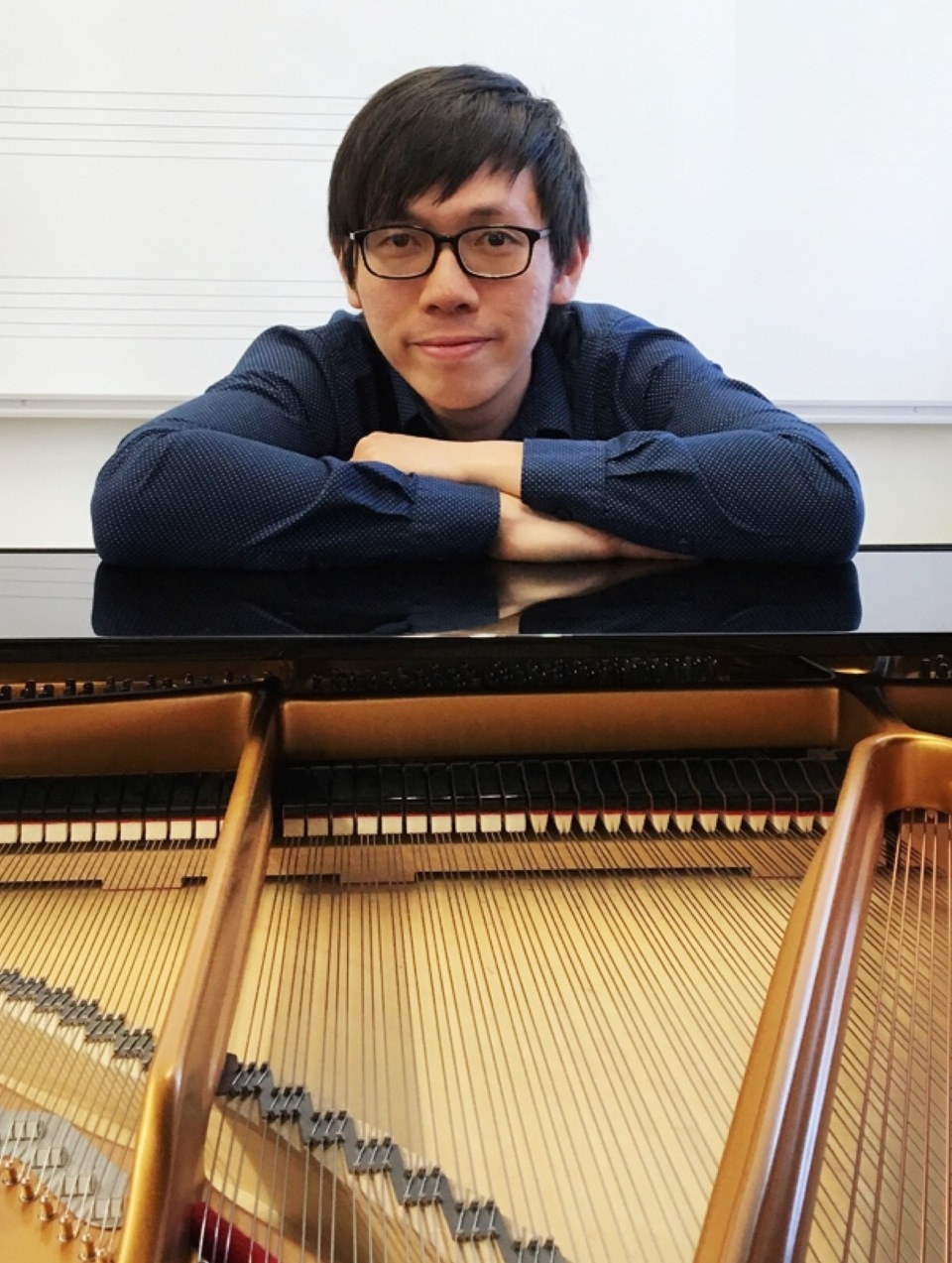
Introducing: Elias Trygg, ISM flute teacher


Where are you from and what instruments do you play?
I am from Finland and I was born in Helsinki. I play the flute as my main instrument but I can play a bit of saxophone and piano too. 

If you weren't a musician what would you be doing? 
If I weren’t a musician I would probably be a painter or carpenter. My profession would be something to do with different forms and materials anyway...

Where did you study?
I studied in the music institute of Lahti University and in the Conservatoire national de Rennes in France. In addition I have studied in many international masterclasses.

 Where are you studying now?
At the moment I do not study anywhere, but I have planned to participate in the entrance examination of one German music university if I'll find more time to concentrate on the program. If that will be impossible I'll study privately with the flute professor of that university anyway. I like studying!

What was the thing that got you interested in music?
I was born into a musical family, my father played tenor saxophone and sang very well. He also played accordion, guitar and piano. My older siblings were and still are musicians too. Basically I just heard music all the time when I grew up. I wanted to become a composer and would have liked to play the violin but my dad gave me a flute as a birthday gift.

Who is your favourite musician/composer?
Mozart and Debussy

What has been your most special musical experience to date?
I cannot say that, there are quite a few of those..

Tea or coffee? 
Definitely coffee, but Tea is also fine sometimes.

Cats or dogs? 
I'm a catman

Salad or Pizza?
Depends on the fillings!

What is your favourite country to visit?
I lived and studied in France so it feels like being my second home country! I love also Austria. I adore also the old Japanese culture and I'm going to visit Japan as soon as possible!

What is your favourite season? 
All the others except winter.


Do you have children? What are their names?
Yes! I have a one year old daughter! Her name is Irene

Friday, November 18, 2016

The Benefit of Childhood Music Lessons

Music lessons are one of the best investments you can make in your child's future! If you have any doubts about the importance of piano lessons and why children should be encouraged to play musical instruments from a young age, we strongly recommend you read this article by Tom Barnes.

Science Just Discovered Something Amazing About What Childhood Piano Lessons Did to You


Thursday, November 17, 2016

Introducing: Ann Valto, ISM Intern


Where are you from and what instruments do you play?
I’m from the USA, and I play violin, piano, and I sing alto as well.

If you weren’t a musician what would you be doing? Definitely a cartoon or video-game characters voice-over actress!

What is your favourite season?
Love, love, love, LOVE winter!

Why are you in Finland?
I fell in love with a Finnish man. We’ve been married for almost a year and a half now.

Salad or pizza?
Chicago-style deep dish pizza!

Tea or coffee?
Coffee.

Do you have any pets? What are their names?
I have a miniature boston terrier named Haze.

Do you have hobbies?
I enjoy playing computer & video games, making holiday arts & crafts, and drawing.

Do you have a guilty pleasure?
I have a soft-spot for Sherlock Holmes mystery novels. :)

Who is your favourite musician/composer?
Ahh! It’s so hard to pick just one. I’d have to go with Grant Kirkhope. He has such a unique way of adding color and life to his pieces.

Tuesday, November 15, 2016

Introducing: Raymond Shon, ISM Piano teacher


Where are you from and what instruments do you play?
I was born in Korea, but I’ve been living in Australia since 2003, so I guess I’m more ‘from’ there. I mainly play the piano, but I also study organ, and I used to play the guitar when I was younger.

If you weren’t a musician what would you be doing?
Oh this one’s a good one! I would say either an architect or a watchmaker.

Where did you study?
I studied at the Conservatorium of Music in Melbourne.

Where are you studying now?
I currently study at Sibelius Academy.


What was the thing that got you interested in music?
I was very lucky to have had good music teachers, who fostered an interest for music in me.

Why are you in Finland?
I need to be here to attend school at the Sibelius Academy.

Who is your favourite musician/composer?
Oh this one’s a hard one… probably my favourite composer of all time would be Bach, but I am also quite fond of the music of Ferruccio Busoni.

What has been your most special musical experience to date?
I would say when I performed in a concert that I curated for the 150th Anniversary of Busoni. 

Do you have any secret/not-so-secret (unmusical) talents?
I am a pro at building Ikea furniture (at least my wife thinks so) and I am quite a competent swimmer and tennis player.

Do you have a guilty pleasure?
At the moment, I do a lot of “surfing the bay”… which is Watch Geek talk for scouring through ebay for vintage watches… and also playing Lego Star Wars on Wii. That one I call “shooting up droids”…!!

Tea or coffee?
I think I drink both regularly

Cats or dogs?
If you had asked me a couple of years ago, I wouldn’t have had any preferences, but nowadays, at gunpoint, I would probably say dogs.

Salad or Pizza?
Pizza all the way (without any guns pointing). I really, really love a good ol’ greasy, cheesy pizza (this also counts as a guilty pleasure)

What is your favourite country to visit?
At the moment, because I live in Finland, I wouldn’t say that Finland is my favourite country to visit, but once I return to Australia, I would love to visit Finland regularly.

What is your favourite season?
Summer

What is your favourite food?
This is the hardest question of all… I miss and crave a lot of Korean dishes that I haven’t had in a while. I love Fish & Chips, I love pizza… and pasta. Oh I love Souvlaki. And I love cake of course. Sushi and Japanese food. And burgers. I also love all the Greek food that my mother-in-law and grandmother-in-law cook for me.

Do you have hobbies?
I am really interested in the history of watches. Especially at the moment, I’m really getting into the history of military wristwatches.

If you could take three things to a desert island, what would you take?
My wife, the complete works of Bach, and my watch collection.

Do you have any pets? What are their names?
No, but my wife and I look forward to getting our first puppy.


Do you have children? What are their names?
No

Monday, November 7, 2016

Introducing: Camilo Pajuelo, ISM Guitar Teacher


Where are you from and what instruments do you play?
I am from Peru. I do play guitar, as my main instrument. In addition, I play some other Latin American string instruments (e.g. charango, cuatro, tiple), and some Andean wind instruments (e.g. kena, siku).

If you weren’t a musician what would you be doing?
I would probably be a carpenter or calligrapher.

Where did you study?
I have studied classical guitar at the National Conservatory of Lima, Peru.

Where are you studying now?
I am finishing my doctoral studies at the Department of Philosophy, History, Culture and Art Studies (Musicology), at the University of Helsinki.

What was the thing that got you interested in music?
Music is the best way to communicate and express myself.

Why are you in Finland?
Because of my studies and work.

Who is your favourite musician/composer?
I have many… just to name some of them Beethoven, Eduardo Sainz de la Maza, Antonio Lauro, and Raúl García Zárate.


Do you have any secret/not-so-secret (unmusical) talents?
I love writing poetry, and also cooking.

Tea or coffee?
Tea.

Cats or dogs?
Dogs.

What is your favourite country to visit?
Spain.

What is your favourite season?
Autumn.

 If you could take three things to a desert island, what would you take?
A guitar, a pencil, and a notebook


Thursday, November 3, 2016

How could I buy or sell an instrument in Finland?

How could I buy or sell an instrument in Finland? Here's some advice from our cello teacher, Johannes Tseppo

It is possible to rent some instruments from ISM, but in case you would like to have your very own instrument, here are some links and shops you might find useful in Finland!

Muusikoiden.net - Probably the first place a musician in Finland goes if they need to buy or sell a used instrument. Unfortunately the site is only in Finnish.
You might also find some instruments from Finnish auction sites like tori.fi and huuto.net.
Then there are plenty of music shops! If the site is not in English and you cannot understand Finnish, it would be easier to just walk into the shop. They will help you there! 

Please let us know if any shop is missing from the list!


Tuesday, November 1, 2016

An Introduction to Improvisation by Jeremy Wong


What is improvisation? 

The first encounter with improvisation started when I was 16 years old. Back then, I was required to improvise on the piano with lead sheets and thus began my personal discovery of making music with improvisation. Later on, after many years of improvising in this single area that I realize that improvisation is far broader and applicable than just on the piano.

From my honest opinion, I think that improvisation is being who we are as human beings. In fact, we have been improvising from the day we were born. The very existence of communication, and the execution of it through conversation is an act of improvisation. For instance, when we talk to our friend or someone we do not know, it is only possible for us to summarize the point of each sentence before we ‘improvise’ the rest of the sentence. So the question remains now is: If improvising is a part of human nature, why do we have such enormous difficulty translating this ‘skill’ to our instrument? Perhaps, many of us allocate improvisation to having a special skill or belonging to an elite group of individuals.

I used to think that improvising requires special training or talent but I realize that improvisation is NOT a special skill. It was this misconception of improvisation in many people (myself included) that led me to think that we need to find pedagogue materials or develop improvisatory methodologies, etc. Surely, these are indeed excellent and valuable materials for people who would want to start improvising regardless of their starting experience. However, the understanding of the purpose of the material in the process of an improvisatory attempt affects entirely the concept of improvisation itself.

My role in improvisation:

Another common misconception of improvising is how one is expected do everything all at once by oneself at the moment, in perfection. However, the truth is far from this. There are many roles during an improvisation act. In the workshop, we will encounter a few of these; supportive roles in terms of harmony or rhythm; and solo roles. I always consider my role when I’m improvising as part of an entity in absorbing and transferring the energy.

I’m afraid of improvisation!

This is perhaps the second most common reason or excuse people do not improvise. (The first being improvisation is a skill for a specialized and elite group) It is human that we feel fear in doing things we are not familiar with. This fear is necessary in helping us know our body language, the readiness of our mind in a situation.

How then does fear play a role in improvisation?

I prefer to regard the fear as a by product of letting ourselves be involved in something of the unknown – that is in simpler words, taking risks. Thus, the understanding of fear and the extend in which we take risk is a process that we can use to know the stress limits and mechanisms that is at work in our body while we react with fear during improvisation. In my opinion, fear exists as positive and negative energy. It is thus part of my goal in improvisation that we are able to transform negative energy to positive ones before and during the act of improvising.


How do I start to improvise?


  • Understand that improvisation starts before you touch your instrument 
  • Recognizing the ‘now moment’ in any situation in life, with and without instrument 
  • Doing things in a different way, even on the smallest scale is also improvising. 
  • Being conscious of the tensions in our body parts during our daily ‘improvisation experiments’, and proceeding to relax those areas as we repeat the activities. 


All the above are not restrained by the instrument, but they are applicable to improvising on the instrument during improvisatory activities.

My approach to improvising on the piano:

There are two approaches in which I try to use when facilitating an improvising activity. The first is based on applying fundamentals of western music theory into practical improvisatory activities/ exercises – systematic applied improvisation. The second is the use of expressive gestures in free improvisation. I’ll introduce various activities that can encourage one to improvise during the workshop.

PIANO IMPROVISATION WORKSHOP

On the 5th of November, ISM is hosting an introductory workshop for piano improvisation between 14:00 and 16:00 with Jeremy Wong.
The focus of this workshop is to introduce improvisatory activities to students and possibly integrate some of them into a typical piano lesson.
There will be two sessions, each intended for a particular age group. Both groups are expected to have a basic amount of music theory and piano playing experience (i.e. basic rhythm figures, simple major scales, etc.) so this workshop is not for complete beginners.
The workshop will take place over two sessions with 2 pairs of students each. Places are limited so be sure to book yours asap!
Group 1: Age 9 - 12
Group 2: Age 13+
Topics to be covered with improvisation activities include:
1. Rhythm improvisation
2. Melodic improvisation
For more detailed information about the program or to reserve your place, please contact our projects coordinator Steph Shon: steph@ismfinland.org